Showing posts with label Destination. Show all posts

Saturday, January 17, 2015

Idyllic nature

Clear the mind of what one imagines God’s own country to be before beginning a tour of Wyanad, advises rakesh kumar


It was an exhaustive five hours journey by flight to Calicut airport from Delhi and from there it took two hours more to reach Vythiri in Wayanad district of Kerala. But our long journey seemed to pay off the moment we prepared to land. From the plane itself I could see a sea of coconut palms ~ it appeared that God himself had arranged them to make them look more beautiful. Of course, the sight was soothing for people like us, who are more exposed to urban life. It was evening when we reached Vythiri, a small hill station at an altitude of 2,000 metres, braving thick forests and hills.
 For all those, who know Kerala only for its rice boats, backwater cruises, sandy beaches, colonial churches or thatch-roofed fishing villages, be informed that this part of Kerala doesn’t offer any of these. Wayanad has tea gardens and coffee plantations covering the hill-sides, the largest tribal population with a distinctive culture, an 800-year-old Jain community ~ the numerous Jain temple ruins as evidence ~ and last but not least, soft green paddy fields (Wayanad means land of paddy) covering the foothills. The region also houses a wildlife sanctuary, forest range, waterfalls, lake, dam, rocks and caves, is a paradise for trekking and, not to forget, tasty cuisine. What else does a visitor need?

Back to nature


 We stayed in the Vythiri Village Resort, sprawled across 20 acres, amid mesmerising mist-clad hills of Wayanad. Sited in a picturesque corner of Wayanad, Vythiri Village is poised to be a five-star resort with 200 guest rooms and a high-tech conference hall spacious enough to accommodate 2,000 delegates, when fully commissioned. The resort has streams, a waterfall, nature walks and a zipline, swimming pool, an excellent Ayurvedic spa, and a huge convention centre housing a state-of-the-art auditorium with a capacity of 1,500. The food is outstanding and the rooms are spacious. There are 12 cottages, 36 deluxe rooms and 26 suites. Some 40 pool villas will soon be ready.
 
Wandering feet


The next morning, it was the chirping of birds that broke our sleep, compelling us to leave bed early because a lot more was to come. Our exploration of Wayanad began with the Edak­kal Caves, which was an hour’s drive from the hotel. Inside these magnificent caves were pictorial writings, believed to be from Neolithic times. Our resort manager had warned that there would be a tough, steep climb for about a kilometre, so better come in trekking mode. Edakkal Caves are not really caves, but a small rock formation that is partially covered. Although the inscriptions on the walls are very old, they are not visually interesting unless one can read them. The engravings are spread over an area of 500 sq feet on the two walls of the cave. Archae­ologists have dated these rock engraings to the Neolithic period, between 4000 BC and 1000 BC.


 Next on the list was the picturesque Kanthanpara Waterfalls, situated about 6 km from Meppadi. The crystal clear water flowing down from the top of the mountain present an exhilarating sight and an ideal picnic spot.
 The next morning, we left for Muthanga Wildlife Sanctuary, which is an ideal place for nature lovers and wildlife enthusiasts. Established in 1973, Muthanga Wildlife Sanctuary is rich in bio-diversity. One could spot elephants roaming freely here and tigers are said to be sighted occasionally. Various species of deer, monkeys and birds are also found in the Reserve, which is home to a small population of tigers, butterflies and insects. The trees and plants in the sanctuary are typical of the south Indian moist deciduous forests and west coast semi-evergreen forests. We had taken the morning safari in a semi-open jeep and were lucky to see deer, peacocks, wild boar, monkeys and elephant. The safari lasted for an hour and covered a total distance of 21 kms.
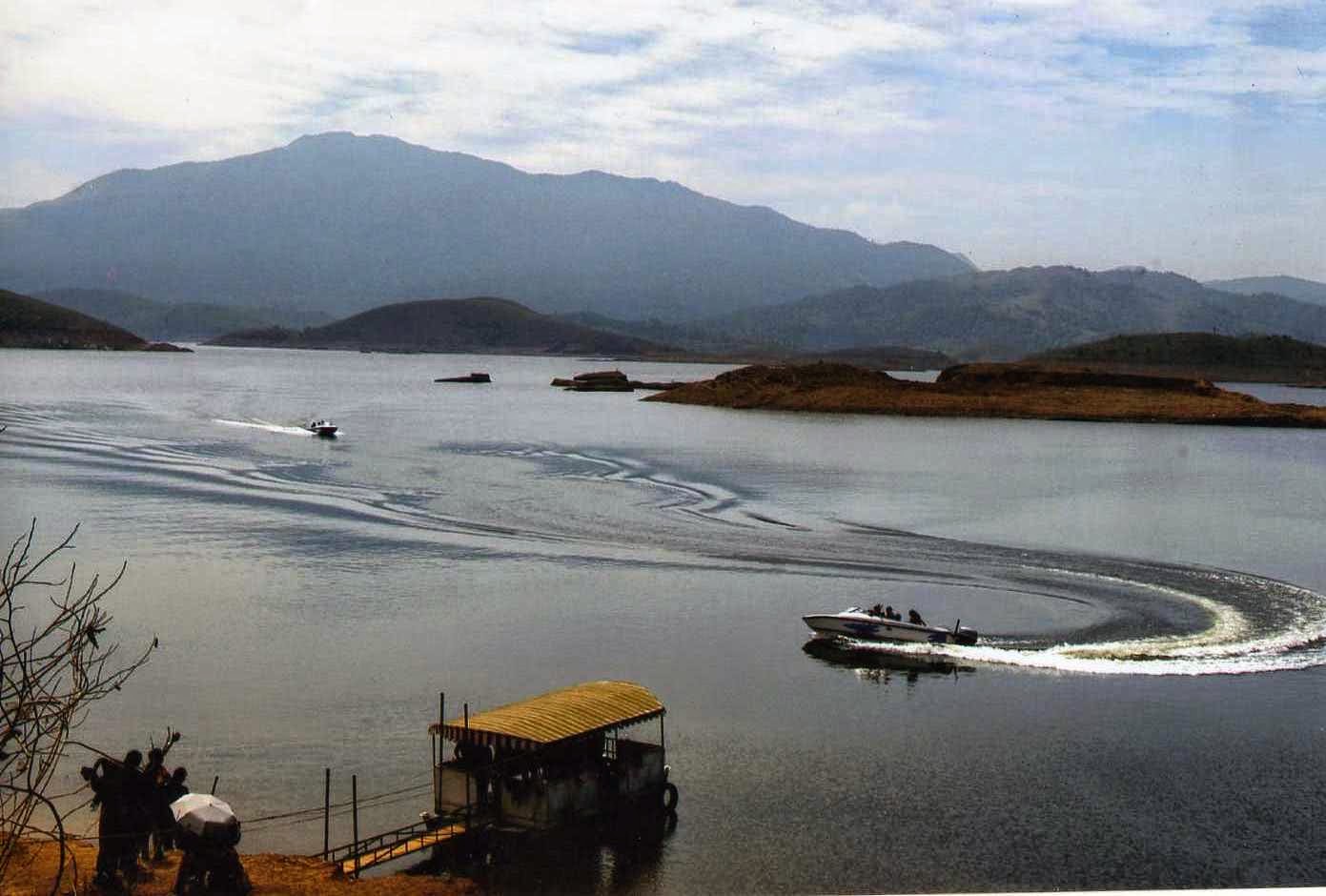
The trip ended by visiting Banasura Dam, the largest earthen dam in India. The view from the dam is beautiful. There is nothing much to the dam itself, but it hosts activities like motor biking and other sports.


Quick facts

How to reach:
There are daily flights (vie Mumbai) and train to Kozhikode from major cities.


Where to stay:
Vythiri Village Resort (+91-4936-256716, vythirivillage.com)

Read More

Friday, January 2, 2015

Four points in Mussoorie

Visiting Mussoorie after 10 years, rakesh kumar explores nooks and corners of the hill station that are little visited


I was just a school kid the last time I was in Mussoorie. I distinctly remember running past shops and tucking in at the food joints on the Mall Road, my dip in Kempty Falls and being dragged to temples in the area. So, when I visited the "Queens of Hills" last month, there was a familiar feel to the place. All my way from Delhi to Dehradun by train and from there to Mussoorie by road, I kept thinking what new was left for me to explore.

Fortunately, help was waiting at my hotel, Jaypee Residency Manor. Apart from the warm hospitality, the most impressive part of the hotel was its 360 degree breathtaking view of the mighty Himalaya and Dehradun at the foothills. Spread over nine acres of lush green area, perched on a hilltop, the hotel offered exotic stays, food flavours and much more within serene surroundings. The general manager of hotel suggested four must-visit places in Musoorie, all of which I had missed on my last visit. Thus began my second sojourn at the hill station.


Lovely Omelette Centre 


What could be a better way to kickstart a trip than with food? Looking for something hot as a respite from that November chill, we landed up at Lovely Omellete Centre. Situated on the Mall Road, the eatery is just a tiny shop, which can easily be overlooked but for the crowd patiently waiting outside. As we reached the shop, we overheard a tourist saying a trip to Mussoorie was not complete without tasting omelette from Lovely Omelette. Seriously!

 Luckily, our turn came just half an hour later. We ordered cheese omelette and I have to candidly admit that it was the best I have ever had ~ certainly worth every minuted we waited. The owner, Khursheed, informed that his family had started the business in 1918. At first, his father only sold eggs, but 40 years ago, then they decided to switch to running an omelette kiosk. He proudly said there was hardly any celebrity, who had visited Mussoorie but given his omelettes a miss. His customers included Rajeev Gandhi, Amitabh Bacchan and many others, whose photographs adorn the shop.


Iconic bookstore

Strolling a little ahead on the Mall Road, we entered Cambridge Book Depot.  This bookstore is popular for fans of author Ruskin Bond. The owner of the shop told us that for the past 14 years Ruskin Bond is at the bookstore every Saturday if he is in town and the bonding session with him has been a huge hit. For a bookworm the bookshop has become a must-visit.


Dhanaulti visit

The next day we decided to venture out of the city. Dhanualti thus found a place in our itinerary. From Mussoorie, it took us around one-and-a-half hour to reach Dhaunlti. Perched at an astonishing elevation Dhanaulti is still untouched by the maddening  rush of the hill stations and maintains a quite a charm all around it.

Driving some eight km further, we reached Surkanda Devi Temple at an altitude of 9,976 ft. The temple is said to mark the spot where the head of Sati, Shiva's wife, fell after she died at her father's yagna. At first sight, the temple seemed not too far away, but our driver warned us that looks were deceptive in the mountains and the place was actually not as close as it looked. On his suggestion many of our colleagues chose to take a pony. Three of us braved the steep climb. Though the picturesque view of the valley and the mountains  compensated our efforts, the going was tough. The path is not exactly well- maintained with difficult patches coming up frequently. The welcome chime of temple bells announced our destination and we found ourselved sweating in the chilly weather. Once on the hill-top, the beauty of the place took our breath away. A vantage point for photography, clouds seems to roam around the temple and I could see snow-capped mountains in the distance.

 Lal Tibba 


Our trip ended at Lal Tibba, the highest peak in Mussoorie. From here one can see the snow clad peaks of the Himalaya, especially Kailash, Gangotri and Yamnotri. There are two cafes at Lal Tibba that offer binoculars to look around. The peak has some interesting history too. During British era, Lal Tibba was the place from where the British would fire shots to indicate time. All too soon it was time to return to the humdrum of Delhi and a tired but satiated lot packed up with a lot of memories.


Read More

Friday, December 19, 2014

A desert jewel

Known for its Shekhawati paintings, Mandawa has much more to offer its visitor, realised rakesh kumar


When I first heard about the place, Mandawa, I mistakenly related it to Mandwa of Agneepath fame. It was our driver, who was taking us there, who quickly corrected me and said, "It is Mandawa not Mandwa."
  Founded in the mid-18th century, Mandawa in Jhunjhuni district of Rajasthan was once home to rich merchant families. These wealthy merchants had constructed enormous havelis that were grandly decorated. While many of these havelis are now in a sorry state, the wall paintings in them are still intact. The beautiful fresco wall paintings that decorate all the havelis is the hallmark of the Shkehawati region, under which Mandawa too falls.
 Just 260 km away from Delhi, it took us seven hours to reach there late at night. At first sight, Mandawa appeared to be a quaint, almost uninhabited town. This impression quickly disappeared as we entered the Sara Vilas Hotel, where we were accorded a royal welcome. 

Magical start


The first day greeted us with several surprises, the foremost being the hotel itself. Set in idyllic, beautifully landscaped gardens, housing 62 vilas and three suites, the hotel has spectacular views with large terraces. It was designed to recreate the regal ambience of a bygone era, promising to be a perfect getaway.
At breakfast, the hotel manager informed us of the many places to explore in the small town. He recommended Mandawa fort, royal havelis, fresco paintings, temples, wild life, camel ride, markets and much more. He also informed us that a number of Bollywood films, including Aamir Khan starrer PK, Jab We Met with Shahid Kapoor and Kareena, Shahrukh starrer Paheli and Sanjay Dutt's Zed Plus were shot in Mandawa.
This information increased our expectations and we set out to explore Mandawa. Acting as our guide, our driver told us that Mandawa is popularly known as the open art gallery of Rajasthan due to its murals and frescoes depicting tales from mythology, legends and contemporary life. The havelis also attracted a large number of foreign tourists, who were minutely examining the paintings.
We first visited the Gulab Rai Ladia Haveli, which was closed from all sides and had one large main gate. Like other havelis, there were two courtyards ~ the outer one meant for men and an inner one in the women's quarters. Next on the list was Hanuman Parsad Goenka Haveli. Its architecture was the same but the haveli depicted paintings of Lord Indra on an elephant and Lord Shiva. The Goenka Double Haveli was twin havelis built for two brothers. It has two gates, its portico adorned with elephants and horses. We then visited Mohanlal Saraf Haveli, Chowkhani Haveli, Bhagchandika Haveli and Lakshmi Narayan Ladia Haveli. Most of them are in a ruined state or are maintained by a watchman. Some of them have been converted into hotels. Interestingly, one of the watchmen informed that the absentee owners lived in Delhi, Mumbai or Kolkata. Since the ownership is shared by several siblings or cousins, they cannot come to an agreement on maintenance.

Nawalgarh


After our tour of Mandawa's havelis, our guide insisted we visit Nawalgarh too, which is 30 km from Manadwa and also known for its havelis. What we noticed that havelis here are cleaner and better maintained. Like Mandawa, in Nawalgarh too, there are many famous havelis are to see, but due to lack of time we managed to visit only the Poddar Museum. Here were preserved not only fresco paintings but the havelis gave a glimpse of Rajasthani culture. From trains to Krishna and mythology characters, from various types of Pagdis (headgear) to wedding dresses, there was so much to see that it took us two hours and cost us our lunch too.  Our day ended with a camel ride to the highest sand dunes in the village, from where we got the best view of Mandawa.

Wild-life


The next day, we planned to visit places a bit away from Mandawa. So Tal Chapar Sanctuary, which was around 70 km from Mandwa, found space in our itinerary for the next day. Famous for the Black Buck, the sanctuary houses around 2,000 deer. It was a pleasant experience, encountering a group of 50-100 deer, roaming in the park. The two-day trip to Mandawa came to an end with a visit to Salasar Balaji Temple.

Read More

Thursday, September 18, 2014

Two days in Goa

It is said the best way to discover new places is to travel on foot, but rakesh kumar suggests a better way ~ on a scooty!

Having heard and read much about the beauty and gaiety of Goa, it was finally time for me to experience the place in person. As soon as we landed at Goa airport, it was the rain, which welcomed us. And trust me, if Goa with its abundant greenery and beaches is beautiful, the rain seemed to add to it. Our hotel in North Goa was around one-and-a-half hour drive from the airport but taking in all the sights en route ~ lush green beauty, coconut trees all over, tiny huts and brightly cloured houses ~ made short our drive to the Hotel Country Inn and Suites by Carlson, Condlim.
It was late by the time we reached the hotel and planned to take a walk to the nearest beaches after dinner. While we made enquiries at the hotel desk, we were told that we could hire a scooty for just Rs 300 a day. The idea was fascinating and the group decided to wake up very early in the morning and explore Goa on bikes. As we stepped out into the night, we found many people, including girls, driving around on scooties. It certainly came as a surprise for us as it was by then midnight and in metro cities such as Delhi and Mumbai, girls will hesitate before stepping out at that hour.
The next day greeted us with a steady downpour and strong winds ensured many in our group chose to stay indoors and snuggle under a blanket. Finally, three of us ventured out to hire scooties. We were told that we could get the vehicle from any grocery shop and without any hassle of paper work. Surprisingly, they only asked for an identity card. While hiring the scooties, we noticed that these groceriy shops were also openly selling liquor. As we expressed our surprise, the shopkeeper smiled that alcohol consumption was quite common here.


Finally, we took to the roads of Goa on our colourful scooters. Frankly speaking, nothing seemed to be more thrilling than exploring the place on a scooty. During monsoon, Goa's weather is very unpredictable and one never knows when one will get a drenching. On a scooty, with the wind in one's hair, who cared about the rain.
Our first stop was Candolim beach, 15 km from Panjim. One of the longest beaches in the state, it is very calm and peaceful, though broken intermittently by the crashing waves. What adds to the scenic beauty of the sand and sea are the scrub-covered dunes at the back.
Our next stop was Fort Aguada, which was a Portuguese fort and is now protected by the Archaeological Society of India. The word Aguada means watering place in Portuguese. It once served as a chamber to store fresh water and also was a defence against the Dutch and the Maratha's. Now a part of it is a jail and another part open for visitors. A nice view of the Arabian sea can be obtained from here, a perfect place for photographs. And yes, a scene from the famous Bollywood movie Dil Chata Hain and Amitabh Bachchan starrer Bhootnath were shot here.


In evening, we headed towards Baga beach, which is located16 km from the state capital. It figures high on tourist itineraries as it offers a vibrant nightlife. The beach is full of shops on the white sandy beach lit with lamps, milling crowd and live bands, all adding up to a carnival-like ambience. Apart from the scenic pleasures, Baga Beach offers lots of activities for the tourists to indulge in.
For shopping, there are several markets in Goa but the ones that have become increasingly popular are the Ingo's Saturday Night market, the long-standing Anjuna Market and the Mackies Saturday Market. Our scooty stopped at Anjuna Market, with its many small street shops, from where one can buy clothes, accessories and other souvenirs. Moreover, there are many shops that sell cashewnut, the famous produce of Goa. Numerous wine shops scattered across the market are a good place to pick up a few bottle of wines for friends and family.
Talking about the city itself, its architecture echoed the Portuguese design. Visting Goa, it would be foolish to miss its famed churches. Our next halt was Old Goa, where the most imposing of all the churches,  Basilica of Bom Jesus is located. Its vaulted interior overwhelms the visitors by its sheer grandeur. This Cathedral has five bells, of which one is the famous Golden bell, the biggest in Goa and one of the best in the world. The church is dedicated to St Catherine and originally had two towers of which only one exists today.


The next day we were visiting the main city Punjim and had to regretfully give up our scooters.  


Read More

Thursday, August 14, 2014

Row over boats

Delhi boasts of at least five boat clubs, but few know about them as most are defunct and little more than sewage ponds. Rakesh kumar wonders why these cannot become places of tourist interest


The year was 1991, when the Capital conceived an idea of providing leisure boating for its residents by identifying potential water bodies in Delhi. Then, Delhi Tourism and Transportation Development Corporation (DTTDC) approached the land owning agencies and in due course of time various lakes were allotted to DTTDC purely with boating rights. Following this there are now six boating venues that have been developed. And this is how, the culture of boating commenced in the Capital. Apart from providing leisure, the other idea was to woo tourists (domestic as well as international) with various water sports and activities. However, 23 years later, what is the status of these boating clubs? Are they serving the purpose of being popular outings and picnic destinations in Delhi or are they mere showpieces? Why even after an increased tourist arrival in Delhi, the city’s lakes have remained less focused by the government? What is the reason that the boat club remains no longer true to its name ~ children are usually seen taking a bath or swimming throughout the summer season and tourists are missing.

The inception

Delhi has been notorious for its intolerable heat, therefore, a number of tourists try to avoid booking holidays during summer months, especially in the months of April to June. And those who belong to Delhi, and are from well-off families, get their tickets booked for various hill stations to get away from the searing heat of the Capital. Now, what about the rest, who are left behind? Or, say, those who can’t afford such luxuries? They look for alternative methods to beat the heat, one of them being water sports, including boating. To meet the needs of these people and to make Delhi more appealing for tourists, DTTDC chose five lakes to begin with, for water activities. These are: Old Fort Lake, Boat Club Krishi Bhawan, Naini Lake, Bhalswa Lake and Swarn Jayanti Park.   The most popular among these is the India Gate Boat Club. Located around India Gate, Boat Club boasts of beautifully laid lawns and water bodies. One of the canals that run parallel to the Raj Path has boating facility for families at nominal price. In the evening people flock here to walk or sit around, and children can be seen playing on the beautiful green lawns and around the trees that surround the structure.

Current status

Delhi’s six main lakes are actually meant for only water activities. However, the irony is that besides Old Fort Lake and India Gate, hardly any tourist steps into the other lakes. In other words, these water bodies have remained so in name  only. And they are mostly frequented by the club members only. Moreover, even the concerned department seems less serious to develop other clubs apart from Old Fort Lake and India Gate.
“Yes I agree apart from these two, other water bodies are not popular among the tourists. The Old Fort Lake gets the highest footfall and second on the list is India Gate canal. The reason for the popularity is that it falls along historical monuments~India Gate and Old Fort,” said a senior official of Delhi Tourism. Therefore for anyone visiting Delhi these places become a must visit. In their leisure time, they prefer to invest in boating in the backdrop of Old Fort or India Gate. But here the question raised is, what about the other lakes, why are they left unknown to the visitors or are they going to lose their importance in the near future like other water bodies, which have all but disappeared?

Apathy all over

Rajan Sehgal, a Delhi-based tour operator, claims that Delhi has a good number of visiting tourists, in the region of 216.37 lakh domestic and 18.17 lakh foreign, as per a report published by Delhi Tourism. However, in many instances the city fails to cash in on them properly. “If you talk about only boating, Old Fort Lake could be the best place for water activities as it is a natural lake with a monument for backdrop. But it is not maintained well. Therefore, it has not been getting its due,” informed Sehgal.
Delhi had around 611 water bodies. Of these, 274 are already extinct, while the rest are also on the verge of extinction, thanks to nothing more than lack of maintenance. The remaining 337 that still have water in them are in a terrible condition. Bhalaswa Lake in the North has turned into a sewage pond.  Neela Hauz Lake in the South and Sanjay Lake in the East are going the same way. Between 1997 and 1998, a total of 21 water bodies disappeared from the map of Delhi.
But the DDA, MCD, block development officers and Delhi Jal Board are in a deep slumber even as the city grapples with water shortage year after year. “I know there are so many problems, but we only take care of activities happening on water. Some of the lakes fall under DDA, MCD and ASI, therefore, we can’t take responsibility for cleaning them,” said another officer of Delhi Tourism.

Shifting blame


When the same question was posed to the Delhi Tourism officials, they were quick to defend themselves. “We are responsible for the activities held on water only. We deal with the boats, promotion of boating activities and so on,” said a senior official. “In terms of promoting them, we are doing so many things ~ we are organising various festivals and water-related sports. We change the boats every three years and replace those which are meant to be replaced.”
Ever since, boating activities were introduced to Delhi, the major concern is cleanliness, as most of the lakes are very dirty. Many are facing lack of basic faciliti

es. “Forget about the foreigners, even domestic tourists will think a hundred times before opting for boating as they are so dirty and full of mosquitoes. By ignoring all these, if they still go ahead, then problems like lack of basic amenities come forward. Would you believe it, they didn’t even have toilets,” said a tour operator.

The real problem

If one were to talk about the main concerns, apart from dirtiness, Delhi lacks a natural big lake unlike other cities such as Bhopal, Hyderabad, Chandigarh or Nainital. Therefore, this also prevents Delhi’ites from enjoying actual boat rides. For instance, the popular Old Fort Lake is natural but it is too small to have any big motor-boats, the other popular India Gate is a man-made canal, where one can’t expect any boat bigger than pedal boats. And the rest of the  boat clubs are less attractive from tourists point of view. “This is the major problem for us. Therefore, we can’t use other motor boats and other water sports to promote water activities,” said the Delhi Tourism official.


BHALSWA LAKE
LAND OWNING AGENCY: Development Commissioner

Delhi Tourism and Transportation Development Corporation Ltd. started boating operations in Bhalswa Lake in May 1992. The lake belongs to Divisional Commissioner, Government of Delhi. DTTDC is not paying any revenue to the office of Divisional Commissioner for the boating activity. DTTDC organised National Championship of Kayaking and Canoeing at Bhalswa Lake during 1993-94 & 1995-96. The lake is rain-fed and there is no other source of water in the lake.  The land where the Boat House is situated belongs to DDA and was constructed by the DDA for DTTDC as deposit work. No formal allotment of this land has been made by DDA to DTTDC.
DTTDC is also imparting training in kayaking and canoeing at Bhalswa Lake. After training some of the boys were selected for Para Military Forces.

 NAINI LAKE (Model Town)
 LAND OWNING AGENCY: North Delhi Municipal Corporation

DTTDC started boating at Naini Lake in 1992. DTTDC pays 12.5 per cent of the gross receipt to North DMC as their share. Besides pedal boats, Delhi Tourism provides motor boat rides. A small cafeteria is also there to cater to visitors. A musical fountain has been installed by former MLA from MLA funds.

BOAT CLUB, KRISHI BHAWAN
LAND OWNING AGENCY: CPWD

Originally boating was started in the water channel adjacent to India Gate monument, during 1991 after obtaining permission from NDMC. At present, CPWD is the land owning agency. The DTTDC pays 12.5 per cent of gross sale to CPWD. Since December 2012, boating activities were closed on the directions of Delhi Police due to security reasons on the water channel adjacent to India Gate. On the request of DTTDC, the water channel near Krishi Bhawan was given to DTTDC to operate boating. Boating here was started from 1st July 2013.)

OLD FORT LAKE
LAND OWNING AGENCY: ASI

Boating was started in 1992. Initially DDA was the land owning agency. But now the lake and its surroundings belong to ASI. DTTDC shares 12.5 per cent of total revenue generated at Old Fort Lake with ASI. 


 SWARN JAYANTI PARK
LAND OWNING AGENCY: DDA
Boating activity was started here in 2011. Earlier, the response was good but due to law and order situation in the park, DDA restricted the opening of the park to limited hours, which badly affected boating. Recently, the timings for boating were restored.
Read More

Monday, July 7, 2014

Unearthing history

During the last decade excavations have revealed a settlement at Sirpur, a small village on the banks of river Mahanadi in Chhattisgarh, that was educationally, culturally and economically far ahead of Harappa in the Indus Valley Civilization. Rakesh Kumar walks through the past

All over the village, there were several blue painted signboards reading, "For Surang Tila take
right", "For Tiberdev Bihar go straight", or "For Laxman Temple take left". Though one has read these names in history books but one never thinks of coming across these places.
Our first stop was at Surang Tila, a 4.65 metre-high pedestal from the 6th century. The monument is a humongous pyramid sort of structure made of blocks of white stones. A courtyard at the top of the monument has several broken pillars and smaller shrines of Lord Shiva. From there we made our way to the ruins of Swastik Vihar, a monastery with two mandapas in the central part and entrance from the west. The shrine on the eastern end contains a stone image of Buddha flanked by standing Padampani on either side. The next halt was Laxman Temple, one of the oldest and famous excavations of Sirpir. Laxman Temple is a brick temple dedicated to Lord Vishnu and stands on a prominent platform and consists of a Garbhagriha, Antarala and an enclosed pillared Mandapa. This, in a nutshell, was the rich heritage at the village Sirpur, around 100 km from the bustling town of Raipur.
 

Excavation begins

Located on the banks Mahanadi, till ten years ago, Sirpur was a lesser known village like any other Indian village, its inhabitators busy with their chores. In 2000, the calm around this sleepy village was broken when hundreds of people descended with spades, shovels and other digging tools and started digging at different points. Initially, villagers didn’t get to know what was happening. By the time they realised it, the small village had put itself on the list of the richest archaeological sites in the country with the finding of 22 Shiva temples, four Vishnu temples, 10 Budha Vihars, and three Jain Vihars, remains of an ancient market, an Ayurveda treatment centre, underground granary market and a sixth century Ayurvedic Snaan Kund (an ancient spa).
These findings, instantly turned the place into an immediate tourist destination, where people not only from India but also from the world started flooding in. The Dalai Lama and the South Korean ambassador have also joined the league of visitors. Till now, Sirpur was known for the magnificent and ancient east facing Lakshamana temple built by Vasanta, the mother of Dakshin (south) Kosala king Mahasivagupta Balarjuna in the 7th century AD, and the Gandeshwar temple, dedicated to Lord Shiva. But during the past decade excavations have shown that the region was educationally, culturally and economically much more developed than the famous Harappa in the Indus Valley Civilisation.
 
Hoary past

Situated in the Masamund district of Chhattisgarh, the history is quite eloquent of this place. Sirpur or Shripur ~ the city of wealth ~ was once the capital of the Sarbhapuriya and
Somvanshi kings of Dakshin (south) Kosala. The town of Sirpur is also mentioned in ancient epigraphic records, dating back to the 5th and 8th centuries AD. The place was a well-known centre for Buddhist study from the 6th to 10th century. Therefore, it was also mentioned in the travelogue of Hiuen Tsang, the 7th century Chinese pilgrim and scholar. Among the findings, while the 8 ft tall image of Lord Mahavir testifies to Sirpur having been a centre of Jainism, the Buddh Viharas point to its being a centre of Buddist learning. Apart from these, Sirpur had once been blessed with the arrival of Lord Buddha himself. It is believed that a devastating earthquake buried the ancient town under mud and debris in the 12th century.

 
Mark on the map
Up until 1872 history was mum about the existence of this settlement. That was when Lord Cunningham, the then director general of Archeological Survey, visited Sirpur and discovered the now famous Laxman temple. This was the beginning of the unraveling of the long journey
undertaken by Sirpur through the dark aisles of time. After that, there was no looking back for the city, spread over an area of about 4x6 kms. It has really proved to be a veritable gold mine for historians, archeologists and the common man alike. A flood of finding, such as 12 Buddh Viharas, one Jain Viharas, monolithic statues of Lord Buddha and Mahavir Jain, 22 Shiv temples, five Vishnu temples, stone and copper inscriptions, hundreds of statues and much more.
"There are 184 mounds with archaeological remains in an area spread over 29.25 sq km in Sirpur,"  said octogenarian archaeologist and excavator A K Sharma, who is also an archaeological advisor to the Chhattisgarh government. "In the last 11 years, 48 mounds have been exposed through archaeological excavation and steps have been taken for conservation of the sites,"
 
No match 
Going by the claim of Chattisgarh tourism department, many findings are much bigger and more relevant than Nalanda and Khajurao. For instance, one of the Budha Vihars, an ancient complex found during archaeological excavations, is being cited as four times bigger than Nalanda, with
unmatched stone carvings ~ not even seen in Khajuraho. The tourism brochure reads: “The monasteries are larger than even the great Buddhist University at Nalanda”, vindicating Chinese pilgrim Hiuen Tsang’s assertion of having seen more than 10,000 Buddhist monks at Sirpur.
The Tivaradeva Mahavihara is the “largest and most ornate” of all the viharas. Among other captivating sculptures are a Naga couple, an amorous couple, and many Buddhist figures and an ancient market complex ~ considered the biggest excavation so far in the world. The findings include materials from ancient grain market, iron market, metal market and even remains of ports on the banks of river Mahanadi. This ancient market is considered an active trade centre from the 6th century BC to as late as 18th century AD. The unearthed complex, apparently a 10-bed hospital, where ancient surgical instruments were also recovered, is located in front of a Vishnu Temple and at a most suitable place for a treatment centre as per Vastu Shastra.
“The Boudh Vihar, found during excavations, is magnificent and it's the biggest temple complex of 6th and 7th centuries to be uncovered so far,"  inoformed Sharma. "For the first time, stone carvings depicting sexual activity among animals have been found ~ a rare form of carvings in Indian archaeology. Such carvings are not even seen in Khajurao and Ellora."


Other attractions 

Gandheshwar temple 

Situated on the bank of Mahanadi, this Shiv temple was built with the architectural remains of  ancient temples and viharas. Although the temple is not basically known for its architecture, the statue of Buddha touching the earth, Natraj, Shiv, Garud Narayan and Mahisasur Mardini are the rare ones in the premises. There are various pictures of Shiva-Leela above the entrance to attract the visitors.
 
Barnawapara sanctuary
Barnawapara Widlife sanctuary is a land mass of undulatings terrain dotted with numerous low and high hillocks well forested in the north-eastern corner of Raipur district . The tributaries of the

Mahanadi are the source of water. This sanctuary is famous for the frequent sighting of the Indian bison (Gaur) Cheetal, Sambhar, Neelgai and Wild boar. Bar-Nawapara  boasts of over 150 species of birds. 

Sirpur music and dance festival
The Sirpur music and dance festival is an annual fest organised by the Chattisgarh Tourism Board. This grand festival showcases the diverse art forms of the country, bringing together artists from across the nation in a cultural celebration. This festival has established its own unique identity in the sense that eminent artistes of national and international repute participate and perform Indian classical, folk and tribal dance and music on the enchanting

stage of Sirpur. 
Nearby attractions
Barnawapara wildlife sanctuary (15 km), Kodar Dam (17 km), Narayanpur (43 km, famous for temples), Malhar (88 km, famous for ancient temples), Arang (46 km, famous for temples) and Shivrinarayan (83 km, famous for temples) are located around Sirpur. 


Read More

Wednesday, June 18, 2014

Awash in blue

Jodhpur, or the Blue City, exudes a rich aura of royalty, harsh desert life and  lively, colourful people. Rakesh kumar walks through the fort city to discover much more than the ubiquitous colour blue


The moment one lands in the city of Jodhpur, one wonders why it is called Blue City. Unlike the Pink City (Jaipur), where every other house is painted in pink, here in Jodhpur, the blue colour is not so omnipresent. To know the answer one will have to exert a little and reach the top of Mehrangarh fort. A panoramic view from here will show how almost every house around this fort is painted blue, interspersed with splashes of white and golden. There are several explanations to the choice of colour ~ possibly to keep them cool in summer or give a uniform look. Located on the foothill of a sandstone hillock, the city of Jodhpur seems like an oasis in the vast desert. Moreover, its glorious past, several forts, monuments, tradition, culture and of course food makes the place enchanting and a huge lure for tourists.
Royal fusion
Needless to say, the whole city of Jodhpur has a royal presence at every corner. With its glorious past, the
Blue City is dotted with palaces, forts and other monument . Notable among them are Mehrangarh Fort, Ranbanka Place, Jaswant Thada and Umaid Bhawan Palace.
Royality in Ranbanka
 Owned by Rajkumar Karan Vijay Singh and Kunwarini Shweta Rathod, Ranbanka recently became the first hotel in Jodhpur to be classified as a Classic Heritage Hotel. The Ranbanka Palace has recently been renovated to increase the royal touch. From its architecture to food or events, the heritage hotel will make a visitor feel like a king. The palace walls are adorned with pictures of kings and queens as well as royal guests, including Princess Diana and Prince Charles, taking one to a bygone era.
Royal wedding
To marry like a king go to Jodhpur. The city has some exclusive royal wedding venues that recreate the pomp and elegance of a royal era. Be it Ajit Bhavan, Umaid Bhavan or Ranbanka Place, each will leave no stone unturned to create a unique royal wedding. The culture of hospitality blends with contemporary modern facilities. “We organise around 20 to 25 marriage in a year," said the wedding planner at Ranbanka Hotel. "We could organise all functions ~ mehindi, sangeet, sehra bandi, the wedding ceremony and the reception. Be it elephant, horse or camel, we arrange everything to make a wedding royal.”
Umaid Bhawan palace
Built entirely in sandstone, the magnificent Umaid Bhawan is one of the most popular palace complexes in the country. The palace can be seen from all parts of the city. The current Maharaja and his family occupy a part of the palace while a portion has been opened to the public as a museum. The rest is managed by the Taj group as a beautiful hotel. Constructed on a grandiose scale, in an art-deco style, the sandstone palace is one of the world’s largest private residences. The Maharaja had commissioned it in  1929 as part of relief efforts when a terrible famine had ravaged Jodhpur.
The local wares

Whatever one is hunting for ~ Jodhpuri juti, shawls, saree, handicraft or spices ~ the local market has it all. Surrounding the clock tower in the Old City, a trip to Jodhpur wouldn't be complete without visiting this bustling part of the city. The market retains a traditional village bazaar feel, even though it is little bit chaotic but colourful. Even a non-shopaholic will find it hard to get away from this market.
Vintage beauties 
Since the city is known for its royality, one can find many vintage cars here. From Royal Royce to Vinteley, a large number of cars are parked in Umaid Bhawan Palace.
Tasty cuisine
The city of the Sun not only gives a royal feeling but pampers the taste buds too. A number of Indian delicacies have originated in Jodhpur, such as Mawa Kachori, Pyaz Kachori, Hot and Spicy

Mirchibada, Junglee Murg and Laal Maans. The tradition in Jodhpur is to first have something sweet and then proceed to the main course. Some popular sweets are Mave ki Kachori, Besan ki Chaaki and Makhan Vade.
Read More

Wednesday, May 28, 2014

A journey to Niagara

Nature seems to have been very generous to the Niagara region, blessing it with a stupendous falls, wineries and much more, finds rakesh kumar

Just around two hours’ drive from Canada’s bustling city of Toronto, one will land in the Niagara region. The region is a tourist hub for several reasons, be it its 70 wineries along the wine route or its quaint town Niagara-on-the-lake that will welcome you with its enticing boutiques, charming inns and beautiful gardens and of course the largest waterfall in the world ~ Niagara Falls. While the falls are the first stop to any visit to the region, the place has everything to attract tourists from all over the world. Feel the water  spray at the Niagara Falls on a boat tour, take a journey behind the falls, get a breathtaking view from above on a helicopter ride or dine in a revolving restaurant overlooking the falls at the Skylon Tower.  All these make the region a must visit place for every tourist, who is on a visit to Canada or wants to visit the country.

Niagara by helicopter

Our first encounter with Niagara Falls began with the helicopter, and looking at the waterfall from helicopter was like a lifetime experience for all of us. I won’t hesitate to say there is no better  place than over the Niagara Falls. It defiantly met all expectation and more! The six-seater helicopter, in only ten minutes, took us to every major site of Niagara Falls. The aerial view from helicopter is  a combination of both adventure with awe-inspiring views, which is unparallel. Without hesitation I would recommend this and I would also jump at the chance to do it again. At the end of the flight we were only too eager to purchase a huge photo of us in the helicopter withpictures of the falls surrounding us.

Maid of the Mist
The experience of the great falls from a helicopter heightened our  eagerness to feel the Niagara from near. And only Maid of the Mist could fulfill this desire. The boat took us to the falls for an  up-close view. One can only experience the full force and fury of the falls from the bottom. The tour operators provide plastic rainwear, but be prepared to get soaked nevertheless. All points in the boat are good for viewing since the vessel makes a loop. Truly an experience not to be missed. But make sure your camera and other electronic
gadget don’t get wet.

 Journey behind the falls
If visiting Niagara Falls, don't miss this attraction. It is literally  an elevator ride to around 150 feet behind and beneath the falls. Then you can read the history on the walls, as you walk through the tunnels to feel the rage of the falls. Outdoor observation decks put you just feet from the edge of the falls. The experience is unbelievable. Prepare to get soaked, even though you are provided with plastic rain gear.

Meal with a view

Not only its falls, the region offers a mouthwatering cuisine too by their celebrity chefs. At the same time, the stunning view of Niagara Falls is an ingredient that makes dining at the falls an experience to  remember. If you are looking for fine dining at its best or want to relax with some delicious casual fare, then your journey will end at the restaurant of hotel Sheraton Windows. It is thof the Niagara.

For kids

There is a lot to do for children also at the falls. The Niagara Falls  has a veritable theme park with ultra tall buildings (Skylon Tower), water parks inside hotels, Ferris wheels and kids-friendly restaurants
(Clifton Hill), the Butterfly Conservatory, Marineland and let’s not forget the falls!
e place where one can enjoy a meal by chef Jamie Kennedy, who uses local organic ingredients for a true farm-to-table experience along with the extraordinary view. There is also Skylone Tower, which is a revolving  restaurant 775 feet above the falls. Or Elements restaurant, with a beautiful view
Read More

Monday, May 26, 2014

Picture perfect


Adventure, shopping, entertainment... the Blue Mountain Village in Ontario, Canada, has everything to make it a perfect holiday destination, finds Rakesh Kumar
 Tired of the hustle and bustle of city life or intend to take a break from the highly industrialised or corporate life then head for Blue Mountain hills of Ontario. Situated in the lap of mountainous terrain, the area is only a two-hour drive north of Toronto, which makes it a really convenient destination for everyone. If one were on a trip to Ontario then giving it a miss would not be wise. And so, after going around Toronto and Niagara region, it was time for us to halt for a taste of rustic life.
 Since the area is nestled at the foot of the slopes, it is blessed with greenery and serenity. Though we had  heard a lot from our guide our first sight of the village took our breath away. There is a lot to do in the area and the whole region caters to every age. It houses nice beaches, gondola tri
ps to the top of the mountain, hiking, biking, mountain coaster ride, nice restaurants, and much more. But what can make one fall in love with the area is lounging beside a fire pit and enjoying buskers, concerts and a host of winter events. Enjoy a horse-drawn carriage ride, stroll down the cobblestone streets visiting unique shops, or step into one of the many restaurants for a gourmet meal or quick treat. This in a nutshell describes the Blue Mountain Village.

Place to stay
One can go for high end modern facilities with all the amenities or look for a beautiful rustic home in a natural setting. The Westing Trillium, the largest resort in the area, will fulfil both these conditions. Situated between the shores of Georgian Bay and the heights of the Niagara Escarpment, the resort is built in the architectural style of grand Georgian Bay lodges. The rooms of the resort are themselves just beautiful and perfect for families with a small kitchen. Outside the resort there is a small pond, where one can hear the sound of tadpoles and frogs. Kids can be seen catching these frogs.

What to shop
Shoppers will find a heaven in the Blue Mountain Village. Just a short walk from the hotel will land you the market. The village houses around 25 shopping centres, restaurants and bars. If you are a fashion freak wanting the latest trends or want home décor or sports equipment or home accessories, don't worry the the village shops will fulfil all your demands. The good point of the market is that it could be covered in a very short span of time.
 In our two days stay at the village we searched out almost all the shops of the villages. Though it a was little expensive, but discount offers tempted us to go ahead and buy gifts or clothes.

Food
If you want to please the taste buds, then village eateries have something for everyone. To enjoy a meal with  family Oliver and Bonacini restaurant (in Westin Trillium House resort) would serve the purpose. If one wants to taste different foreign cuisine then Tholos will help you out and if you are a pizza lover, then the village has Firehall Pizza to answer your demand. Here there are so many eating options from Beavertail to burger or from Italian pizza to casual gourmet dining, one could go on and on. 


Choose your adventure
If it is fun or adventure one seeks, then Blue Mountain Village beckons. Here you have to choose your own adventure and the staff at Activity Central (that takes care of adventure activities in the village) will introduce you to a whole new world of activities and recreation. The place offers Ridge Runner Mountain Coaster, Timber Challenge High Ropes, Zip Lining, Open Air Gondola, Mountain Biking, Plunge Aquatic Center and list goes on. Whether you want to invest an entire day, or just want to sneak in something quick before dinner, you will find every adventure here. Though we wanted to try out each of them, being short of time we tried only Ridge Runner Mountain Coaster. This takes riders on an exhilarating coaster ride as it twists and turns down the mountain thorough varied terrain. Here riders can control their speed and enjoy the stunning views of Georgian Bay and surrounding Niagara Escarpment.

Timber Challenge High Ropes 
This features suspension bridges, ladders, cargo nets, zip lines and more, Reaching 50 ft above the forest floor, the timber challenge winds through the canopy with awe-inspiring views and breathtaking heights.  One caveat is that this high rope course is quite challenging physically, so it might not be a good idea to try it after an indulgent night of food and drink.

Open Air Gondola 
If you want the view from the top of the mountain without having to work for it then it will solve your purpose. It will take you to a scenic ride to the top of the Escarpment.  

Scenic caves
A description of Blue Mountain would be incomplete without talking about Scenic Caves. This is one of Canada's great natural wonders and is located at the highest part of the Niagara Escarpment. It gives a chance to trek thorough the mysterious caves and caverns that were formed over the course of hundreds of millions of years of ice movement. In an hour long trip we ventured deep inside the mountain, explored a labyrinth of caves and crevices. Here one could end up exploring places like Natural Refrigerator, Ice Caves that are frozen round the year, Lovers Rest, Fat Man's Misery, the narrowest spot of 36
centimeter, Ekarenniondi, a marked path to the mysterious underworld or the hidden natural fortress which sheltered the Petun people from their enemies or the longest suspension footbridge in Ontario (126 metres long). In fact, there is a lot more to explore. 
Eco adventure  
Since the whole area of Blue Mountain Resort is known for adventure sports, there were several activities being conducted in this 200-year-old forest. The most prominent is Zip Lining, the longest zip trip covering more than  half-mile and dropping a dizzying 48 meters from the cliff top to earth. It is a little scary but a must try. Clipped to a cable you soar from one location to the next. 
Scandinave Spa 
After all this trekking in Scenic Caves and adventure activities at Blue Mountain Village resort, a visit to the spa was justified. We stopped at Scandinave Spa. Just a few minutes drive from downtown Collingwood and Blue Mountain Resort and nestled in a natural forest setting, the spa will cleanse your body and mind with its hot baths and refreshing cold plunges.


Read More

Saturday, April 7, 2012

Elephant catwalk


During Holi, the lands of kings and queens came alive with the elephant festival, recounts Rakesh Kumar
On the day of Dulhendi, when the whole country was eagerly waiting for Holi, the pink city Jaipur was geared up to witness a unique fashion show– of elephants. Though it may sound strange it is true in the land of kings and queens, Jaipur. Over 90 elephants were decorated in different colours and themes by their mahouts (caretakers of elephant) to participate in the elephant festival.
“It is an annual festival, where all the elephants in the city compete with each other to get best decorated elephant shield,” informed Bina Kak, the forest and tourism minister of Rajasthan. The festival began with traditional sounding of drums followed by a procession of elephants decorated like brides with jewellery and other ornaments from trunk to tail. The catwalk was witnessed by 10,000 visitors. The best dressed elephant was given an award.
“Rajasthan has always been a state of royalty. Therefore, not only in Rajasthan but in the whole India elephant-ride was once considered a luxurious ride fit for kings, royal family and nobles. So, in order to stick to our culture we (Jaipur tourism) organise this festival a day before Holi, or Dulhendi, every year,” said Uday Pal Singh, ex-tourism officer of Rajasthan.
This year the festival was organised at the Rambagh Polo Ground in Jaipur and inaugurated by the tourism minister Bina Kak by beating the traditional drums. “The craze for this festival is growing year on year. Earlier we organised it in Chaugan ground of Jaipur. But, seeing the multiplying numbers of tourists and overwhelming response from visitors, we have organised it in the polo ground instead of Chaugan ground as it is bigger,” said Bina Kak.
Apart from the elephant show, there were many other features like Gair Dance, Matka Race, Chakri Dance, Tug-of-war (Indian vs Foreign), Kachhi Ghodi, Kalbeliya dance, Chang Dhap, Braj Ki Holi, Bum Rasia and Tribal Dance among others that kept people spellbound. This festival attracts not just Indians but also foreigners. “I learnt about this unique festival from one of my Indian friends in London. Therefore, I preferred this time to visit India,” said Thomos, who came from London for this festival only and got impressed by the decoration of elephants.
On the other hand Kolkata based businessman, Sandeep Vaharia, thought one could catch a glimpse of the entire culture of Rajasthan in this festival. He said, “Though I belong to Rajasthan and am a frequent visitor of Jaipur, this is my first chance to be here. I am amazed to see the festival. It seems that whole culture of the state is here like Chakri Dance, Langa Gayan, Tribal Dance and others.”
Among winners in various categories was Champakali who won the elephant decoration competition. Shanti came second and Rani third. While Laxmi was given a special prize because of her jeans apparel.
More than 10,000 people, including a fair number of foreigners thronged the festival and took part in different competition. A tug-of-war was held between Indian tourists and foreigners, which Indians won both rounds. In the Matka Race, Kenny Jurat from Australia won the first round while Round 2 of the same match was won by Kartik Parmer of Singapore. “How can we lose against foreigners on our own land,” said Sakshi a house maker, who was with the Indian side in the tug-of-war. Marcel, from Holland, said, “Though we lost the game we enjoyed it a lot.”
Visitors in the festival did not let go even a single chance to play Holi. Tourists mounted on elephant back sprinkled colours on each other. “It was more interesting than what I heard about it. It gave me a royal feeling, when I was sitting on the back of an elephant and playing Holi. It is going to be one of the best Holi in my life,” said 23-year-old Poonam Pasi from Delhi, who wants to visit again. The festival ended with gulal fireworks and the band recitals.
 It was not only spectacular procession of elephants and cultural events that drew tourists from all over the world. Tripathi, a businessman from Kanpur was at the elephant festival just to check out how a warm state like Rajasthan, where water is scarce, maintained so many elephants. “Earlier I was surprised when I heard about an elephant festival in Rajasthan. Because it is the home of camels, I wondered how come a festival of elephants. Now I would like to appreciate the efforts of the Jaipur Tourist department because of the way they have maintained so many elephants here.”
Read More