Wednesday, February 1, 2017

'PM broke his fast to taste my vegetarian food'


If one has to prepare a list of top-notch chefs in India, it would start with none other than celebrity chef Sanjeev Kapoor. His twitter profile describes him chef, traveller, blogger, author and food passionate among other epithets. However, as a child Kapoor had never wanted to become a chef but persue architecture. However, destiny had written something else for him and instead of any office he landed in the kitchen. From there he never looked back. In his long career, Kapoor has many things to flaunt, such as hosting the longest running cooking show, Khana Khazana (18 year), in Asia, which aired in 120 countries; and publishing around 36 books on cookery that are estimated to have sold around 10 million copies around the world. There are a lot many more laurels to come as the chef is just 52-years-old.
It was nothing but the magic of his hands, which led even Prime Minister Narendra Modi to break his fast with Kapoor's vegetarian food during his UAE trip. In an event organised by LT Foods to promote Basmati rice, one of the top 10 rising chefs of the US, chef Joseph "JJ" Johnson, and chef Sanjeev Kapoor, various recipes using Basmati rice. In an interview with The Statesman, Kapoor spoke about his career and various aspects of Indian cuisine. Excerpts:
You started your career long time back, when going to office was considered the only lucrative job. Why did you choose kitchen over office?
Actually, I wanted to do something different, something bizarre, something which was not done by family or friends earlier. My family members were OK with my decision but not friends. They laughed at my decision. They said I had gone mad.
How did the journey to kitchen begin?
I'll tell you one thing. I entered the kitchen at the age of 10. My inspiration was my father. Those days, Punjabi men did not enter the kitchen. But this was not the scene at my home ~ my father used to cook a lot. Another reason for his entering the kitchen was that my mother was a vegetarian. It meant my father had to cook non-vegetarian food. At that time I used to help my father, then my love towards food developed. However, when I stepped into a commercial kitchen for the first time, I found it very different from home kitchen.
You have been in this industry for almost three decades. What changes have you noticed in all these years?
Globalisation of food has grown, eating out has increased manifold, people have started talking about healthy food and younger generation has moved towards junk food. But the good change one notices is that these days, people don't feel shy talking about their food (regional). Now, it is not like 'Ghar ki murgi dal barabar'.
If we talk about Indian food, it doesn't have a global presence like Chinese, Italian or Thai. Where do you think we are lagging?
Many places. It starts from us only. We have to talk more about and should taking pride in Indian foods. Also we need to create more conversation about the goodness of Indian food and let people know good things about our food.
What I have noticed is that many a time our good things don't get much exposed. For instance, in the southern parts (of our country), we cook our food with coconut oil. A few years back many people started complaining that coconut oil is not good for health as it enhances heart complexity. But I knew it was good. Here I want to point out that we people never fought for it. We never said it is good, and what is the benefit of using coconut oil. Now they (those who said coconut oil is not good) say it is good. It means we are dependent on their acknowledgement, while it is our food. At the same time, media should also promote Indian food. I'll give you another example: Whenever we go abroad, we do eat Indian food but we fail to include other people in it. If any of us goes to the US, one eats Indian food, but not openly ~ we feel shy. We need to come out of it.
You are not limited to supervising hotels and restaurants, but you also had to take care of flight food and railway food. What differences have you noticed in these foods in terms of cooking?
There is not much difference. It is much like home cooked food. Since we have to transport food, therefore, we need to keep their technicality in mind. For instance, when we take our tiffin, we need to see many things in it.
You cooked vegetarian food for Prime Minister Narendra Modi during his UAE trip. How was the experience and what things had you to keep in mind, because the Prime Minister is very particular about his food?
No, no, it is not like that. He tasted everything we cooked. Let me tell, it was his fast, he broke it and tasted everything. He even asked, 'Is he chef Sanjeev Kapoor?' It was eaten not only by the PM, but every delegate and even the king of UAE ate vegetarian food that day. Of course, non-veg food was there for many but none of them tasted it.
Who cooks at home? Does your wife cook?
Whosoever stays at home cooks, be it my wife or me. She is also a very good cook. And I never complain about her cooking skills ~ if I do, I will stop getting good food at home!
Any suggestions for budding chefs?
Work hard, work from the heart…don't try to become a celebrity chef but try to present work, which can be celebrated. They should focus on work, not on personality.
Read More

Thursday, April 16, 2015

Foodies' Capital

Chatpati Delhi”, “Food Capital”, “People of Delhi are foodies”… These are but some fond descriptions given to the Delhi foodie, who rarely lets go of a chance to gorge on a good spread. Known for its diversity, Delhi is also the melting pot for not just people and culture but also cuisine. From roadside kiosks and dhabas to five-star hotels, from a simple daal-rotito a gourmet offering, the city has it all. A truly “food Capital”, all the states find a place here and restaurants offering authentic cuisine, be it from Punjab, Tamil Nadu, Karnataka, Andhra Pradesh, Goa, Bengal, Nagaland,Assam,Kashmir,Gujarat or Rajasthan, leave Delhiites spoilt for choice. Just take a walk through the city and one can find each street and lane filled with a history of gastronomic glory, offering the flavours of heritage, tradition and a passion for food that has been shaped over eras, across borders and in the hearts of the people.
When it comes to international food, the ubiquitous Chinese fare was always around, so were the Thai, French and Italian dishes that figured in the menus of posh restaurants and hotels. But what is interesting is that, lately, a host of international players are setting up their base in Delhi and the National Capital Region (NCR). Authentic Chinese, Mexican, Pan Asian, Russian, Ukranian, Greek, Arabian, Lebanese and South African restaurants are cropping up in the Capital, drawing its citizens, ready to explore new culinary delights.

Multi-cuisine to single
Being the Capital city of India, Delhi gets noticed worldwide very easily; therefore, many international players, who intend to start their business in India, prefer Delhi as their first choice. It is like a gateway to India - whosoever visits India comes to Delhi first.“Delhi is the first place, where most of the tourists from all over the world land,” said Vikas Pall, vice president of BB Hospitality Ventures Pvt. Ltd. “During their stay, they look for international cuisine. I think this is one of the reasons we can find many standalone international cuisine restaurants are thriving in Delhi.”
Just a decade back, most of the restaurants in Delhi were offering only selected Indian cuisines with a dominance of North Indian food. However, down the years, the taste of Delhi has witnessed a drastic change. If recent trends are to be believed, now people are more open for international taste. Therefore, it is nothing to be amazed at that international chains such as McDonalds, Dominos, Pizza Hut, Pizza Express, Wimpy and TGIF have a good strong presence all over Delhi.
“Earlier the restaurant owners used to play safe by offering multi-cuisine menu in one restaurant. Moreover,there were very few restaurants in Delhi (only in five-star hotels), that catered to international tastes. But now, you can see there are a large number of standalone restaurants thriving in Delhi,” said Vineet Wadhwa, owner of Fio Cookhouse and Bar, Nehru Place, and Fio Country Kitchen and Bar, Saket. Both outlets are two-cuisine restaurants, offering Indian and Italian food. “When I started this restaurant four years ago, I was warned by my friends against offering only two cuisines but I thought I should try it,” said Wadwa,who has not regretted the decision.

Restaurants all over
This is not the case just with Fio House.One can find many such restaurants in Delhi, which are offering just one international food to its patrons. Take a look at some of the popular outlets: Neo Rong in Radisson Blu just offers Thai food; in Hauz Khas Village, Imperfecto dishes out authentic Mediterranean food; for popular Chinese food Taipan of Oberoi or Empress of China is a good option;for European fare step into Orient Express, Taj, or Brix at Grand Hyatt; and for Lebanese food, there are many restaurants like Kabir'z FnB, The Tummy Section and Shawarma Point.
While these are big names, what is more heartening is the increasing number of restaurants bringing a gastronomic variety. “Earlier many of the restaurants were situated in five-star hotels only. But now many standalone restaurants are coming forward,” informed Wadwa. Moreover, it is not that Delhi is only housing restaurants belonging to popular global cuisines. One can now see many lesser-known foods, which are flourishing as well in the Capital. For instance, Bline in Chankyapuri offers Russian food. Located in the posh Anand Niketan (Chanakyapuri), Bline is a tiny place with just four tables, each being a four-seater. An open counter to the kitchen lets you catch wafts of what’s cooking and a wall mounted television set is usually turned on to a Russian channel. All in all, this is one of those places where one can expect to get authentic Russian food.
Bayt al Arab at Lajpat Nagar, is well known to Indian and Arabs as it offers authentic Arabian dishes. Similarly, It is Greek To Me in Safdarjung has become a foodie hub for those who like Greek food. Hi Lanka for Sri Lankan food, Kayalan -Truly Malaysian offers Malasian food in Saket. Recently, Barcelos, a South Africabased casual dining restaurant chain opened its first outlet at Khan Market in Delhi to provide authentic Portuguese cuisine.
“Delhi is the place where one can find taste from all corners of the world,” said Rohit Malhotra, Indian GM Operations Barcelo. “Here people are ready to experiment with taste. And yes, the economy of India is growing very fast. Therefore, nothing could be a better place then Delhi to start our first chain.”
If we dig into Delhi’ culinary history two decades back,one would find that Delhi was the country's first city to have a Spanish and a Thai restaurant with expat chefs - Esmeralda (1986) and Thai Pavilion (1992), respectively, at The Oberoi but these turned out to be flashes in the pan. Its love for the unfamiliar and the authentic, this time round, is here to stay and get more intense as more restaurants open to cater to this new-found love.

Well traveled
Saumitra Chaturvedi, the food and beverages manager of Raddisson Blue Ghaziabad, who manages three restaurants - Avatar: The World Kitchen, Kama: An Epicurean Culinary Journey,and Lust:The Cocktail Bar - cites another reason for the surging of international restaurants in Delhi. He opined that now Indians are traveling extensively abroad and are very familiar with the global taste. “Now a good number of Indians go abroad for vacation. During their stay abroad, they happen to taste many dishes. Thus, after returning home, they look for the same taste in India too,” Saumitra suggested.
Echoing the same, Akshat Mallick, chef of Taj Palace, informed, “Of course Indians have traveled all over the world. Now you can’t fool them by twisting tastes, bringing Indian flavour in international cuisine.”
The other reason for the growing popularity of international cuisine is Internet - now people learn about the dishes online and ask the chef to cook the same. “In Blue Ginger, which is famous for Vietnamese cuisines, I saw many people asking about the local dishes of Vietnam,which sometime we don’t have in our menu. Then after consulting with the chef we prepare those dishes for them,” said Akshat Mallick.
Apart from this, Indian chefs are very popular all over the world. They go to different restaurants across the world, learn the basic of international dishes and serve Indian consumers. “Now the time has come when Indian foodies want to experiment with the tastes.Therefore,many chefs bring popular international cuisines to India,” said Vineet Wadwa, who is himself a chef.

Expats and MNC
culture The growing numbers of expats in Delhi has also led many restaurants to include international dishes in their menu.In Delhi, one can spot people from all nationalities roaming around the markets. A lot of them are from the various missions or embassies here but then a fair number are tourists visiting the country.
But then, these foreigners are willing to shell out more for authentic, good quality food. One reason is that the cost of living is very low for an expat, who commands an overseas salary in the company he is working in. The same is true of those employed in a multi-national company (MNC). Ever since, MNCs have flourished in the NCR, people from all over the world started flooding to India, making this their second home. Food joints catering to their tastes were but a natural outcome.

Developing new taste
Anand Parkash Tiwari, a young retailer and resident of Rajouri Garden, is not a foodie, but likes tasting new dishes. He prefers international cuisine, something different from the regular Indian and Chinese dishes. “I don’t like eating the same Indian food daily.I think we should try every dish in the world. I want to try all the dishes around the world,” opined Tiwari.
However, Gaurav Yadav, who is not as choosy as Anand, is more health conscious. He finds international cuisines to be more healthy. “Punjabi food is very oily and it has adverse effect on health. Whereas,if we look at international cuisine,many are healthy,” said Yadav.
Sharing this opinion, the chef from Taj, Mallick, informed that earlier most of the eating joints had a conventional choice of food, which is either Punjabi, Mughlai or Chinese.“But these youngsters are more health conscious. This led to the development of several eateries serving Turkish, Mexican and Italian food only. Some restaurants are even changing their menu to authentic speciality cuisine,” informed the chef. Most players believe that the trend has emerged due to the change in taste of Delhiites that has been brought about in no small measure by the globe-trotting tendencies. “We tried to Indianise most dishes thinking that it would suit the taste of the customers, but we were wrong,” asserted a chef in a popular restaurant. “We have seen that the demand for authentic food is high hereand so we are changing the menu.”


Read More

Schengen Deli, Malcha Marg

When I first got to hear this name, I thought the place must have some connection with Europe or European visa facility. However, I was halfway there. The place really has European connections, but food-wise. Schengen Deli, Bistro, is a new eatery in the hub of expats, Malcha Marg, Chankyapuri and it offers the authentic European cuisine. With a decor of white and pale green with yellow windows and doors, the eatery delivers a calm and comfortable feel. The lively Latino music, colourful plates, walls decorated with scenes from different Schengen countries add to the beauty of the place.

In terms of food, the restaurant offers European fare, with an in-house deli, bakery and bar. This eatery makes an ideal setting for a quick pick-meup breakfast on busy mornings, a tranquil Sunday brunch, or even a buzzing watering hole for after-hours. We started with Hearty Chicken Soup, then ordered Schengen Ceasar Salad and Chicken Skewers. The Chicken Skewers were delicious and so was the salad. In the main course we tried their thin crust pizza and chicken grilled, which was a delight. There was no space left for dessert, so we skipped it.

Read More

Quote Bar, Connaught Place

Tucked in the busy lanes of Regal Square complex, Quote Bar is just a six- month-old bar and lounge, still trying to carve a niche among its patrons. It's located right above Café Coffee Day outlet, with which the restaurant shares a common entrance, which tends to create a confusion for customers. Moreover, there is just a small "Q" sign at the entrance and a small sign on the first floor and one at the rooftop.The moment one reaches the entrance, the staff will escort the diner to the restaurant.

The bar is spread across two floors with aesthetic architecture. The moment one enters the premises,there is a giant colourful beer mug design on the wall with various funny and serious quotes. While the lower floor has seating arrangements, the upper level is a bar with high seating, couches and a DJ area in a corner. The music is at a bearable decibel level, allowing conversations to take place.

Coming to food, Quote Bar offers Indian and Continental. In starter, we tried Dahi Kebab, Tandoori Paneer  marinated with spices and crusted with papad  in vegetarian, and in non-vegetarian we tasted Crispy Chicken with basil and chilly.Tandoori Paneer was good,but I found nothing new in Dahi ke Kebab. Next on our plate was Smoked Chicken Pizza - with olives, oven dried tomato and rocket. The pizza was a thin crust and good to eat.In the main course,we tried Quote Bar special, which includes popular Indian cuisine from all regions. We were served Punjabi Chicken Tikka Masala served with Lacha Parantha and Kadhai vegetable and Chicken Chettinad with Lemon Rice and Vegetable Porial and Malabar Parantha, which was the winner. „

Read More

Saturday, March 14, 2015

Colour Kerala

The coffee and tea plantations of Wayanad, as also its rich tribal culture, beckoned rakesh kumar

We were asked to get ready very early, around 6 am, if we wanted to really feel the essence of coffee plantatione. The local guides said, be it plantations, animal sanctuary or anything connected with nature, morning is the best time when they look more beautiful. Thus, it was nothing but our love for coffee, which led us to leave our cozy bed early in the morning, ignoring the cold winds. We were at Vythiri Village Resort, in a small hill station at Wayanad, in Kerala. Wayanad, which means paddy fields, falls in South Kerala. Unlike North Kerala, this part doesn't have rice boats, backwater cruises, sandy beaches, colonial churches or thatch-roofed fishing villages. But this small hill station is rich in coffee or tea plantations, the largest tribal population with a distinctive culture, an 800-year-old Jain community, home stay and much more beyond sight seeing. 
 Our  day began at the coffee gardens near our resort. Interestingly, in many areas of this region, one side of the hill had coffee plantations while the other side housed tea gardens. Since it was a morning time, we came across many women, with baskets on their backs, busy plucking tea. Our guide, who also worked at our hotel, informed us that here in Wayanad district, coffee plants could be found in every house, growing lush on any piece of land. The  climate in the area is perfect for cultivating coffee and tea. Therefore, this place has also earned the title Coffee County of Kerala.
All about coffee
Robusta and Arabica are the two major varieties of coffee grown in this region.
The coffee plant is an evergreen shrub, which can grow to 20 ft in its natural state. However, the tree is regularly trimmed to 6 ft for production to keep the nutrients from going to the tree rather than the beans. When the coffee berries are a rich, red colour, they are ready for harvesting. Each berry contains two seeds, which are processed to make coffee. 

After having a first hand experience of coffee plantations, our next visit was to a tribal village. Just a 20-minute drive from our hotel, took us to the interior of a jungle, away from the main populace. We had to stop our car in the middle of jungle, walk ten more minutes, climbing down grassy slopes and wading across streams, to reach a small village of Paniya tribes.
This settlement has only ten houses of bamboo-and-mud-plaster huts with thatched roof. Interestingly, all of them own some amount of land, on which they grow pumpkin, pepper vines, turmeric, ginger and tapioca. We were told that the Paniyas fall under the lowest strata, even among the tribals, therefore, they avoid mingling with the mainstream. Agriculture is their mainstay of livelihood. But they also work as farm labourers.
 
Jain temples
 

The next day, we visited the Jain community, which has a very significant presence in Wayanad region. They are said to be migrants from Karnataka, when Jainism went into a decline there, some 800 years ago. We visited one of the temple ruins,  Janardhanagudi temple at Panamaram, dating back to the 12th century. Though it has been taken over by the Archeological Survey of India, it is in a pathetic state. At the temple, there was a heap of granite blocks covered with carving lying by the side of the road and blocking access to the three roofless temple mandapas, their pillars too ornamented with curvaceous yakshis, fierce dwarapalas and amorous figures. A Jain community member said these temples were demolished by Tipu Sultan. 

The visit cost us almost half the day. We ended our visit with the Wayanad Coffee County, run by Ranjini and Rajagopal Menon. It was a dream home and we didn't know how the time flew. Situated in a 12-acre land, the house is blessed with greenery including tea garden, coffee plantation, coconut and areca palms. The courtyard boasts a swimming pool and leads on to a pavilion perched over a gurgling rivulet. Rajdeep and Ranjini's hospitality was like icing on cake. A must visit place.
Read More

Wednesday, February 4, 2015

Kathputli, Defence Colony


The first thing that caught my attention on entering the restaurant Kathputli was the traditional performers just outside, enticing the customers. While this sight was unique, their music sounded pure, transporting one to Rajasthan. It also served to enhance one's expectation of the food and we stepped on to the first floor, where the restaurant is located.
Started three months ago in Defence Colony, Kathputli claims to be a one stop destination for authentic Marwari Thali. The interior of the restaurant is classy with simple décor. On the wall are pictures of Rajasthani forts, festivals and culture. The staff, dressed in Rajasthani attire with turbans, hover around, ensuring one is served well.
In terms of food, the restaurant just offers the Marwari Thali (no onion, no garlic) including their signature welcome drinks, starters, main course and dessert in a handcrafted German silver Thali. Their Thali is huge, with lip-smacking and scrumptious delicacies like Sabut Mirchi Pakoda, Daal Panchmel, Gatta curry, Daal Baati Choorma, Paatra, Khandvi, Sookhi Gobhi Shaak, Daal Gujarati, Methi Thepla and Marwari Kadhi. The menu at Kathputli changes every week and the emphasis is on serving seasonal varieties.
-Rakesh Kumar
Read More

Saturday, January 17, 2015

Idyllic nature

Clear the mind of what one imagines God’s own country to be before beginning a tour of Wyanad, advises rakesh kumar


It was an exhaustive five hours journey by flight to Calicut airport from Delhi and from there it took two hours more to reach Vythiri in Wayanad district of Kerala. But our long journey seemed to pay off the moment we prepared to land. From the plane itself I could see a sea of coconut palms ~ it appeared that God himself had arranged them to make them look more beautiful. Of course, the sight was soothing for people like us, who are more exposed to urban life. It was evening when we reached Vythiri, a small hill station at an altitude of 2,000 metres, braving thick forests and hills.
 For all those, who know Kerala only for its rice boats, backwater cruises, sandy beaches, colonial churches or thatch-roofed fishing villages, be informed that this part of Kerala doesn’t offer any of these. Wayanad has tea gardens and coffee plantations covering the hill-sides, the largest tribal population with a distinctive culture, an 800-year-old Jain community ~ the numerous Jain temple ruins as evidence ~ and last but not least, soft green paddy fields (Wayanad means land of paddy) covering the foothills. The region also houses a wildlife sanctuary, forest range, waterfalls, lake, dam, rocks and caves, is a paradise for trekking and, not to forget, tasty cuisine. What else does a visitor need?

Back to nature


 We stayed in the Vythiri Village Resort, sprawled across 20 acres, amid mesmerising mist-clad hills of Wayanad. Sited in a picturesque corner of Wayanad, Vythiri Village is poised to be a five-star resort with 200 guest rooms and a high-tech conference hall spacious enough to accommodate 2,000 delegates, when fully commissioned. The resort has streams, a waterfall, nature walks and a zipline, swimming pool, an excellent Ayurvedic spa, and a huge convention centre housing a state-of-the-art auditorium with a capacity of 1,500. The food is outstanding and the rooms are spacious. There are 12 cottages, 36 deluxe rooms and 26 suites. Some 40 pool villas will soon be ready.
 
Wandering feet


The next morning, it was the chirping of birds that broke our sleep, compelling us to leave bed early because a lot more was to come. Our exploration of Wayanad began with the Edak­kal Caves, which was an hour’s drive from the hotel. Inside these magnificent caves were pictorial writings, believed to be from Neolithic times. Our resort manager had warned that there would be a tough, steep climb for about a kilometre, so better come in trekking mode. Edakkal Caves are not really caves, but a small rock formation that is partially covered. Although the inscriptions on the walls are very old, they are not visually interesting unless one can read them. The engravings are spread over an area of 500 sq feet on the two walls of the cave. Archae­ologists have dated these rock engraings to the Neolithic period, between 4000 BC and 1000 BC.


 Next on the list was the picturesque Kanthanpara Waterfalls, situated about 6 km from Meppadi. The crystal clear water flowing down from the top of the mountain present an exhilarating sight and an ideal picnic spot.
 The next morning, we left for Muthanga Wildlife Sanctuary, which is an ideal place for nature lovers and wildlife enthusiasts. Established in 1973, Muthanga Wildlife Sanctuary is rich in bio-diversity. One could spot elephants roaming freely here and tigers are said to be sighted occasionally. Various species of deer, monkeys and birds are also found in the Reserve, which is home to a small population of tigers, butterflies and insects. The trees and plants in the sanctuary are typical of the south Indian moist deciduous forests and west coast semi-evergreen forests. We had taken the morning safari in a semi-open jeep and were lucky to see deer, peacocks, wild boar, monkeys and elephant. The safari lasted for an hour and covered a total distance of 21 kms.
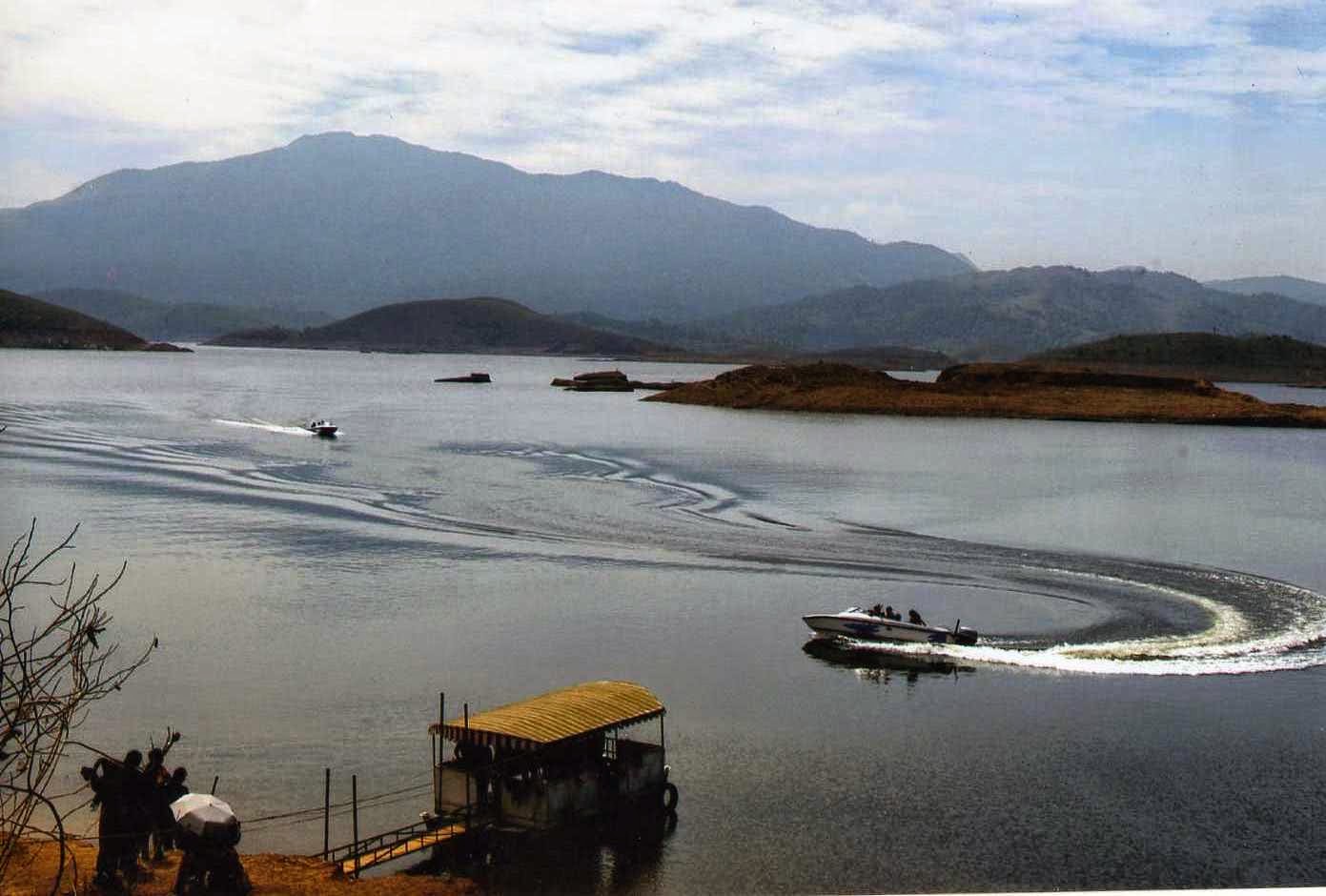
The trip ended by visiting Banasura Dam, the largest earthen dam in India. The view from the dam is beautiful. There is nothing much to the dam itself, but it hosts activities like motor biking and other sports.


Quick facts

How to reach:
There are daily flights (vie Mumbai) and train to Kozhikode from major cities.


Where to stay:
Vythiri Village Resort (+91-4936-256716, vythirivillage.com)

Read More